
Breaking through barriers in the world of chess
by Anne Kiefer
Judit Polgár (1944 – ) ranks as one of the greatest chess players of all time and is considered the greatest female player in history. Her upbringing was unusual, but it prepared her to challenge the gender bias rampant in the chess world until recently, and to prove that gender is irrelevant to achieving success in the game.
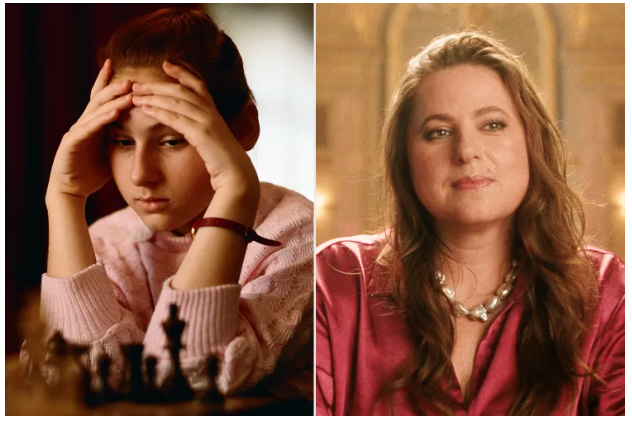
Credit : Yves Forestier/Sygma via Getty (left); Courtesy of Netflix (right).
When Judit was born in Hungary in 1976, Hungarians lived a hardscrabble life of limited opportunity under an oppressive authoritarian regime. Her parents were determined to make a better life for Judit and her two older sisters. Her father contended wholeheartedly that “geniuses are not born, but made.” He and Judit’s mother homeschooled their daughters with a singular focus on chess, hoping that would pave the way to a better future for them.
Judit won her first tournament at age six and competed regularly, mostly against adult men. Men dominated the world of chess at that time. Leading chess players, including Bobby Fischer and Garry Kasparov, disparaged women’s ability to compete with them. Judit did not doubt her ability however, and she never entered the women’s tournaments that were offered as second-rate alternatives to what was considered the highest level of chess competition.
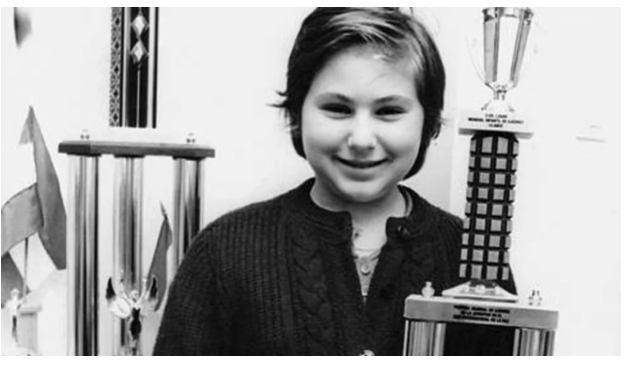
Polgár quickly rose to the top ranks of international chess. When she was 15, she broke Bobby Fischer’s 33-year record to became the youngest player to reach grandmaster level. When she was 26, she defeated Garry Kasparov. She is the only woman ever to be rated among the top ten chess players in the world. She held the title of top-ranked female chess player for 26 years until her retirement at age 38 in 2014.
In 2012 Polgár created the Judit Polgár Chess Foundation to raise awareness of the value of chess in supporting education, including the education of children facing barriers to success.
Polgár reflects positively on her unusual childhood. Although her education was centered around chess, she describes it fondly: “My father and mother are exceptional pedagogues who can motivate and tell it from all different angles. Later, chess for me became a sport, an art, a science, everything together.”
She is proud of her achievements in breaking through the gender barriers that had held women back in the chess world.
“We are capable of the same fight as any other man, and I think during the decades that I actively played chess, I proved it as well. It’s not a matter of gender.”
Judit Polgár, 2015, Time.com
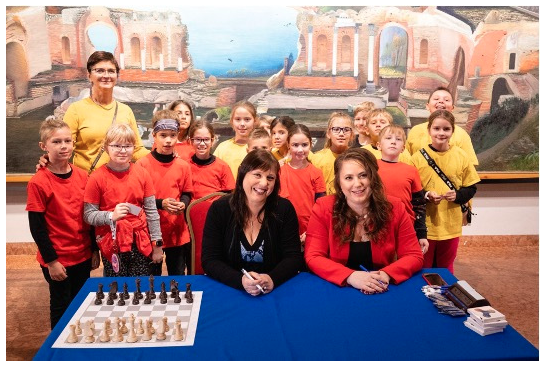
 Finger Lakes Justice Partnership
Leave a comment